

Adult bladder diary
Information clinically reviewed by Bladder & Bowel UK – August 2026
An adult bladder diary is a tool used to record trips to the toilet to pee, the volume passed, and any episodes of wetness or leakage. It also records what you drink, how much, and when.
This resource is produced by Bladder & Bowel UK, a charitable service supporting people with bladder and bowel conditions.

Why is completing an adult bladder diary helpful?
An adult bladder diary helps your healthcare professional understand how your bladder is working, as part of an assessment. It provides information on how much you drink, how much urine your bladder can hold, how often you pee, and any wetting or leakage episodes. It can help to find patterns or links that may be causing your symptoms.
You should try to keep the diary for three days. A one day diary may not give a true picture.
Top tips — what to record
- Write down all your toilet visits in the day and at night
- Keep a jug by the toilet and use this to pee into. You can then write down how much urine (pee) you pass at each visit.
- If you have had a pee when you did not have the jug there, put a tick in the column to show you have passed urine
- Write down any bladder leaks and any extra information about anything that might be linked to them, such as coughing, sneezing, exercising
- Measure your drinks. You may want to measure your mug or glass, so that you don’t need to measure each drink
- Record when you go to bed and when you get up in the morning
- Keep the diary on days when you’ll mostly be at home, such as over a weekend. Do this on days close to your appointment. You may want to include a workday or a day when you’re away from home. Your drinking habits may be different on those days
How to fill in the diary
Wetting scale
If you have any leaks record whether you were damp, wet or soaking. If you use pads or pull ups, write down when you changed them and how wet they were.
Urgency scale
Urgency is about how quickly you need to get to the toilet when you know you need to go. The urgency scale runs from 1 (able to hold on without worry) to 3 (leaked before reaching the toilet):
- Could hold on for a short time without worry.
- Had to rush to the toilet, or would have leaked.
- Leaked, or were wet before reaching the toilet.
Write down which of these you felt at each toilet visit or leak.
In (drinks)
Write what you drank (water, juice, coffee, alcohol etc.) and how much — measured, or described (small glass, mug, teacup).
Notes
Record activities, e.g. out for a walk, exercising, at home.
Example diary entry
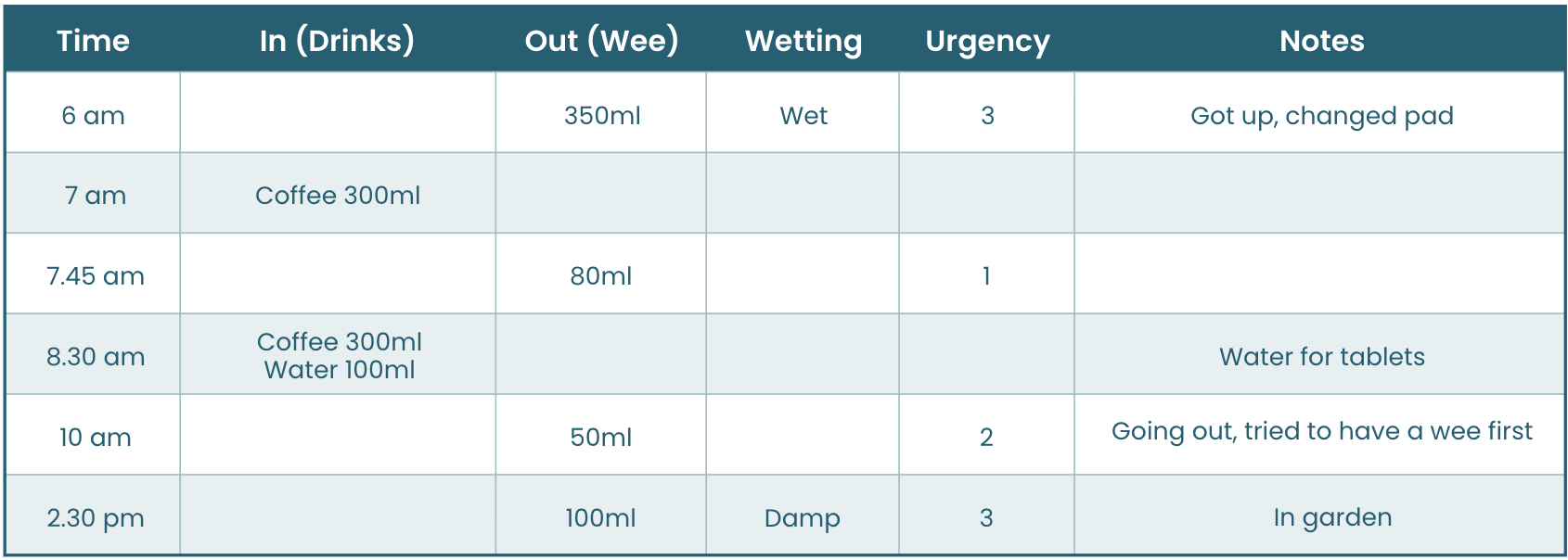
Download your free 3-day adult bladder diary
The Bladder & Bowel UK 3-day bladder diary is free to download — don’t forget to take your completed diary to your healthcare professional appointment.
Frequently asked questions
Or speak to a member of our clinical team
A bladder diary is a tool used to record trips to the toilet to pass urine, the volume of urine passed, and any episodes of wetness or leakage. It also records what you drink, how much, and when.
It is recommended to keep a bladder diary for at least 3 days, as a one-day diary may not give a true picture. Choose days when you’ll mostly be at home, close to your appointment.
Record when you go to bed and get up, every trip to the toilet to pass urine and how much (using a measuring jug), any leaks and what triggered them, what you drink and how much, and any relevant activities.
The urgency scale records how urgently you needed to reach the toilet: 1 means you could hold on for a short time without worry, 2 means you had to rush or would have leaked, and 3 means you leaked or were wet before reaching the toilet.
Your healthcare professional uses the bladder diary as part of an assessment to build a clear picture of how your bladder is working. It helps them understand how much you drink, how much urine your bladder holds, how often you need to pass urine, and whether you experience any leakage or urgency.
The patterns in your diary can help identify triggers and contribute to a more accurate assessment, which means any advice or treatment recommended is better tailored to you.
Start by speaking to your GP or another healthcare professional, who can refer you for further assessment or treatment.
You can also contact the Bladder & Bowel UK confidential helpline on 0161 214 4591, or explore our information library at bbuk.org.uk for guidance on a wide range of bladder and bowel conditions.
Further information and support
For more information visit our adult bladder page and information library online. You can also contact the Bladder & Bowel UK confidential helpline online or by phone 0161 214 4591.
For further advice on bladder and bowel problems, speak to your GP or other healthcare professional.
Author – Bladder & Bowel UK clinical team
Last reviewed: August 2026 · Review due: August 2029
